Putting the system in health systems

What is Healthcare
Service Orchestration
Service Orchestration
Automated coordination of clinical, operational, and administrative workflows across departments, facilities, and digital systems — shifting organizations from reactive, fragmented delivery to a proactive, integrated model.
Unlock better outcomes
01
Improved Patient Experiences and Flow
02
Operational Efficiency
03
Capacity and Resource Optimization
04
Enhanced Risk Management and Decision Accuracy
05
Better Financial Performance and Lower Loss-Adjustment Expenses
Why Healthcare Needs Service Orchestration?
Fragmentation
Coordination
Misallocation
Burnout
Standardization
Underutilization
Inefficiency
Streamline and automate workflows

Sales & FMO development
Member services
Provider network management
Telemedicine support
Payer & care management
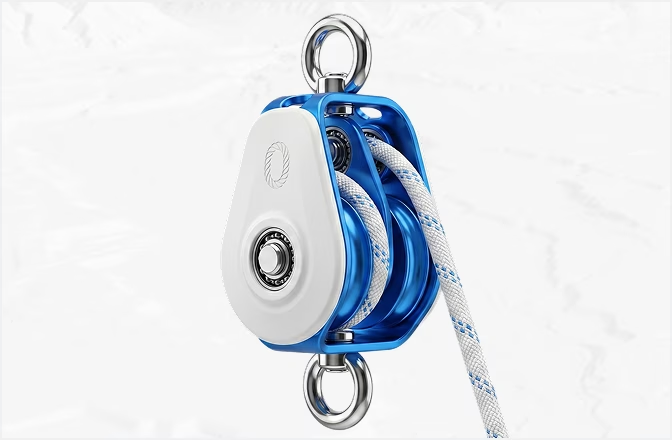
Seamless Coordination
Orchestration platforms are a central hub harmonizing care activities, clinical workflows, and communication across the care continuum. Every touchpoint—from ED intake to post-discharge follow-up—is part of a coordinated whole.

Data and System Integration
We eliminate data silos by integrating electronic health records, third-party applications, medical devices, lab systems, and imaging platforms into unified, interoperable platforms. Real-time data flows freely where and when needed.

Real-Time Decision Support
Intelligent, real-time, patient-centered decision-making occurs when the right information is presented to the right person at the right moment. Clinical teams gain complete visibility into patient status, enabling proactive, not reactive, care.
Let’s engage

Start the Readiness Conversation
Explore whether your organization is ready to move from AI ambition to operational execution.
Request an Executive Briefing
In a 30-45 min briefing, an Oeight practitioner will share a tailored point of view on trends, risks, opportunities, and practical next steps relevant to your organization.